
The OODA Loop In Modern Workflows
John Boyd's breakthrough in the early 1970s is still the safe, sound, solid way to develop effective processes.
3/11/20261 min read
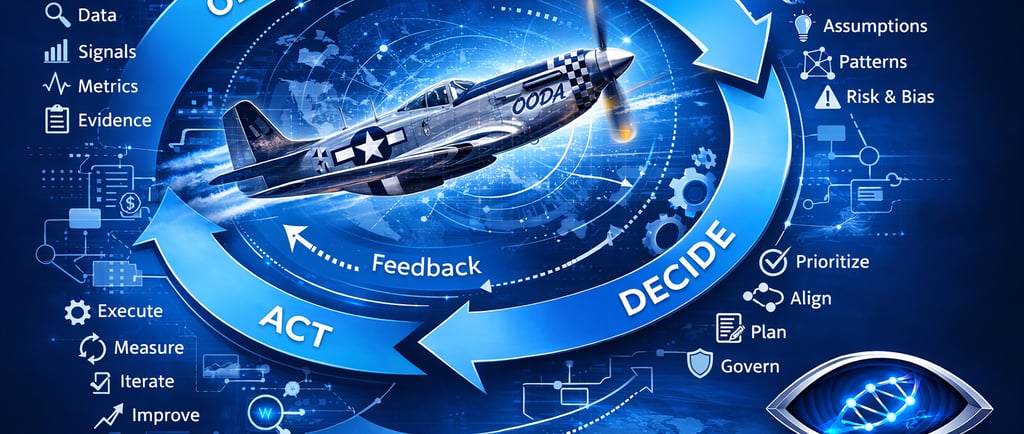
At IonSQA, we believe operational excellence depends less on static rules and more on responsive systems—the kind that learn, adapt, and anticipate. That’s why John Boyd’s OODA loop—Observe, Orient, Decide, Act—continues to influence how we model effective oversight and process management.
Boyd was a fighter pilot trainer who analyzed hundreds of dog fights and realized that the fighter who gained position advantage first almost always prevailed. The process he developed, called OODA, describes how continuous, rapid learning creates advantage in complex environments. The same holds true for organizations navigating evolving regulations and technical landscapes.
In practice:
Observe: Gather evidence, not noise. Distinguish signal from status reports.
Orient: Interpret data through context—culture, mission, and customer.
Decide: Build pathways that enable confident, consistent decisions.
Act: Execute with intention, measure outcomes, and circle back to improve.
When processes follow this rhythm, they stop being scripts and start being systems—responsive, resilient, and reliable. In other words, they keep your operations safe, sound, and solid.
At IonSQA, we use this mindset to help teams build oversight that moves as fast as change itself.
#ProcessPower #OODA #OperationalExcellence #ContinuousImprovement #LeadershipInAction #GovernanceMatters #SafeSoundSolid