
Human In The Loop Oversight
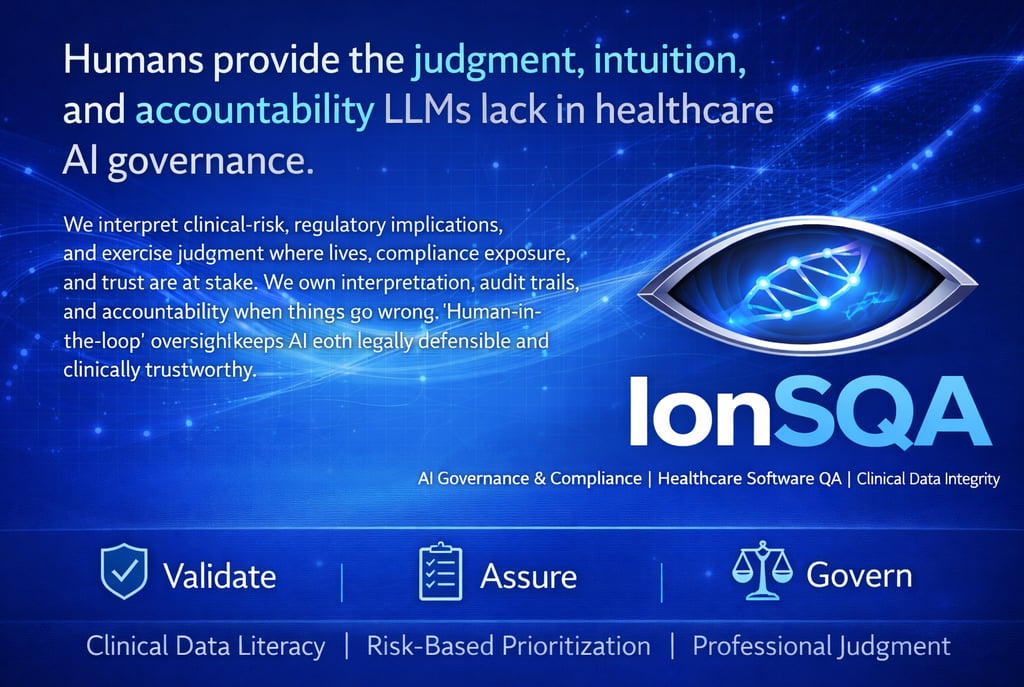
Humans governing AI work and output is still the most important aspect of validation.
Tom Barrett
3/24/20261 min read
My post content
HIL‑AIW: Why the Human‑in‑the‑Loop Is the Real Innovation
HIL‑AIW stands for Human‑in‑the‑Loop AI Workforce, and its most important idea isn’t the “AI workforce” part—it’s the “Human‑in‑the‑Loop” part. In a HIL‑AIW system, AI agents are treated like specialized workers that handle tasks, but humans are deliberately placed at key decision points to review, approve, or override actions, especially where risk, ethics, or regulation are involved.
What “Human‑in‑the‑Loop” Actually Means Here
In HIL‑AIW, the human‑in‑the‑loop isn’t a last‑minute checkbox; it’s baked into the architecture. Humans define policies, set thresholds, and decide which actions can be fully automated and which must be reviewed. The system is designed so that:
Agents can propose plans, generate content, or execute workflows, but high‑impact decisions pass through human review.
Agents operate under constraints derived from human‑defined rules, so their autonomy is bounded.
Humans own final accountability for outcomes, even when AI does most of the work.
Why This Shifts the Value of Practitioners
From a QA, governance, or safety‑critical perspective, HIL‑AIW makes human judgment the core control lever. Instead of asking “Can AI replace this job?”, the question becomes “Where in the workflow does the human‑in‑the‑loop add the most value?” That’s where professionals like you step in: you design the guardrails, own the escalation paths, and ensure that the AI workforce behaves like a responsible team, not an unchecked black box.
In other words, HIL‑AIW doesn’t diminish the need for skilled practitioners; it re‑centers the human‑in‑the‑loop as the essential stabilizer in increasingly autonomous AI systems.